
Fundraising Nonprofit Resources
How Mobile Bidding Changes the Guest Experience
Paper bid sheets ask a lot of guests. They have to find the table, write down a number, and keep checking back if they want to win. Most bid once and move on, so items can sell for far less than they could have. In our research, that works out to about 45% of an item’s adjusted fair market value. With mobile bidding, items sell for about 75%.
Mobile bidding for nonprofit auctions makes it easier for guests to participate and stay engaged throughout the event. Here’s what changes for guests once bidding moves to their phones, and why premium items gain the most.
Bidding Happens Wherever Guests Are
A gala gives guests plenty to do: cocktail hour, catching up with friends, dinner, the program on stage. An auction table in the corner has to compete with all of it, and most guests get caught up in the night and never make it back.
With mobile bidding, the auction is in their pocket. Guests register once with their contact and payment info, so they’re ready to go before the first course hits the table. They can bid between courses, from the bar, or while catching up with a board member across the room. If you open bidding before the event, guests can browse and place early bids from home, and supporters who can’t make it in person still get a shot at the items they want.
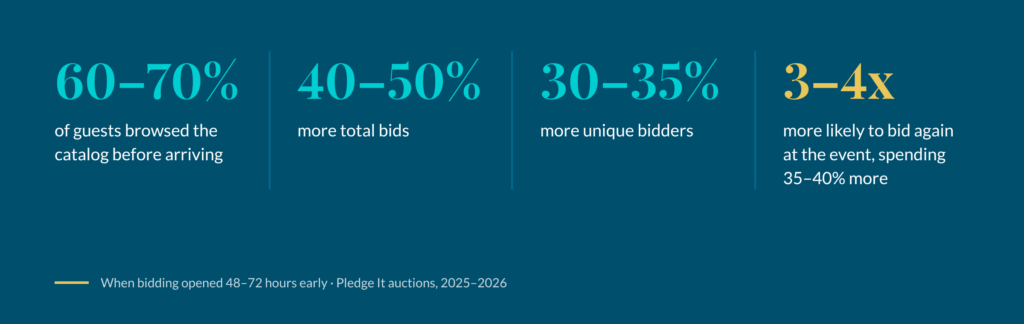
In our 2025 and 2026 auctions, opening bidding 48 to 72 hours before the event led to:
- 60 to 70% of registered guests browsing the catalog before they arrived
- 40 to 50% more total bids
- 30 to 35% more unique bidders
- Early bidders who were three to four times more likely to bid again at the event, and who spent 35 to 40% more overall
For in-person events, we suggest opening bidding a few days ahead. Standalone virtual auctions work best running 7 to 10 days.
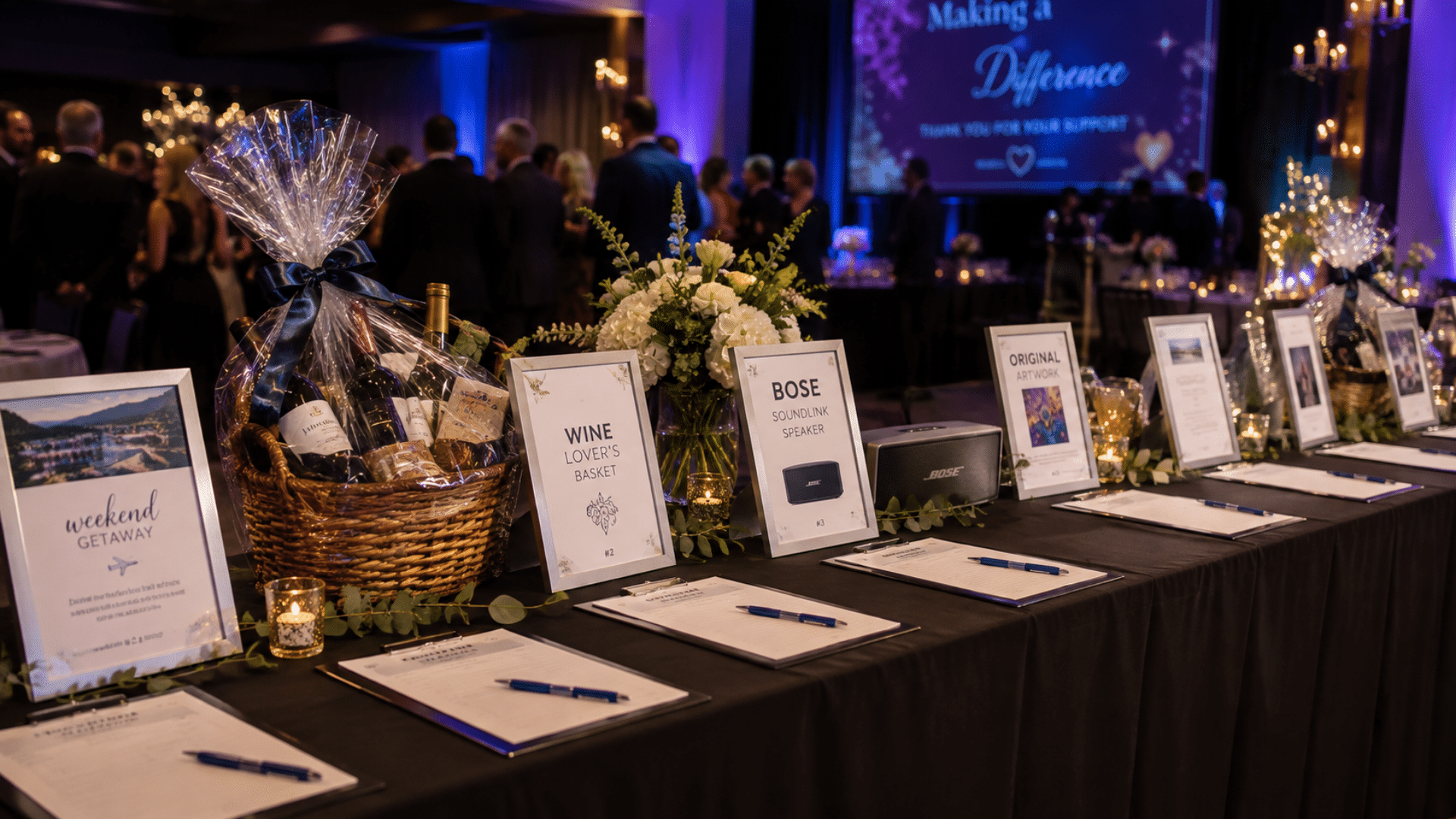
You don’t have to give up the auction table. Swap the blank bid sheets for printed ones that show your logo, the item title, its estimated value, and a short description, plus a QR code that takes guests straight to that item’s bidding page. When something catches their eye, they scan the code with their phone and bid in two taps. They still get to browse the table, and you never have to hand out a clipboard.
Getting Outbid Becomes a Reason to Come Back
A bidding war only starts when guests know they’ve been outbid.
With mobile bidding, the moment someone tops their bid, they get an instant text and email. That one change turns a single bid into an ongoing back-and-forth, and the back-and-forth is where prices climb. Pledge It data finds that 59% of outbid alerts lead to a new bid. For instance, a guest who bid on a wine tasting at 7:15PM and forgot about it gets pulled back in at 8:30PM when someone outbids them. Now they have a decision to make, and they can make it in about five seconds without leaving their seat.
Guests know where they stand on every item they care about, and they don’t have to keep circling the tables to find out.
Guests Can See the Energy Build
People bid on what other people want, so it helps to show them what’s popular. A live activity display puts current high bids and a running amount-raised counter on a screen near the bar or behind the stage, so guests can watch high-value items climb throughout the night.
When a guest sees a vacation package jump three times in 10 minutes, it stops being just a nice item in the catalog and starts being the item everyone’s talking about. It also gives your emcee something to work with. “The Napa trip just passed $4,000” is a lot more fun to announce than a reminder that the auction closes at nine.
Why Premium Items Benefit Most
Gift baskets and gift cards tend to fall flat at a silent auction. Donors lean toward items that feel exclusive, like travel packages and once-a-year experiences. Of course, choosing the right items matters, too. Our guide to curating winning auction items covers how to select and present packages for different auction formats.
Bidders also treat experiences differently than things. A physical item comes with a store price, and bidders tend to stop there. A trip has no price tag to anchor to, and it gives the winner something to look forward to and talk about. The research backs this up: In a national survey of more than 12,000 Americans, most people said an experience they bought made them happier than a material purchase.
Think about what it takes to bid on a $10,000 villa stay with a pen. You walk up, read the sheet, and write a large number in front of whoever happens to be standing there. A lot of guests won’t do it. The ones who do often bid once and walk away, so the item closes after two or three bids and lands well below what it could have raised.
Mobile bidding removes most of those barriers:
- Serious bidders stay in the race. Outbid notifications keep your top prospects engaged, so a bidding war can actually happen instead of ending after one round.
- The pressure moves to a private screen. Guests can raise their bid from their seat without an audience, which makes big numbers easier to commit to.
- The pool of bidders grows. Out-of-town donors and guests who couldn’t attend can compete for the same package.
- Momentum is visible. When a premium item climbs on the live display, it draws in guests who haven’t looked at it yet.
Then there’s pricing. We recommend opening bids at 30 to 50% of fair market value, closer to 50% for high-ticket items, with increments of 10 to 15% so bidding stays competitive. A max bid option lets serious bidders set their limit and let the system bid for them, so they stay in the race even while they’re at dinner. If you’re working with consignment packages, open above what the package costs you so every sale nets money. Starting a trip too low can also make it feel like less of a prize.
If some packages go to the live auction instead, keep that lineup to about 8 to 12 items, and save your biggest package for last so the room’s energy peaks at the end.
The Night Ends Without a Checkout Line
Paying is the last thing guests do at an auction, so that experience might leave a lasting impression on them.
With mobile bidding, checkout can run automatically when bidding closes, using the card guests added when they registered. Bidders can also choose to cover transaction fees on their winning bids during registration, so more of every dollar goes to the mission. Winners head home happy, and your team skips the end-of-night scramble at the payment table.
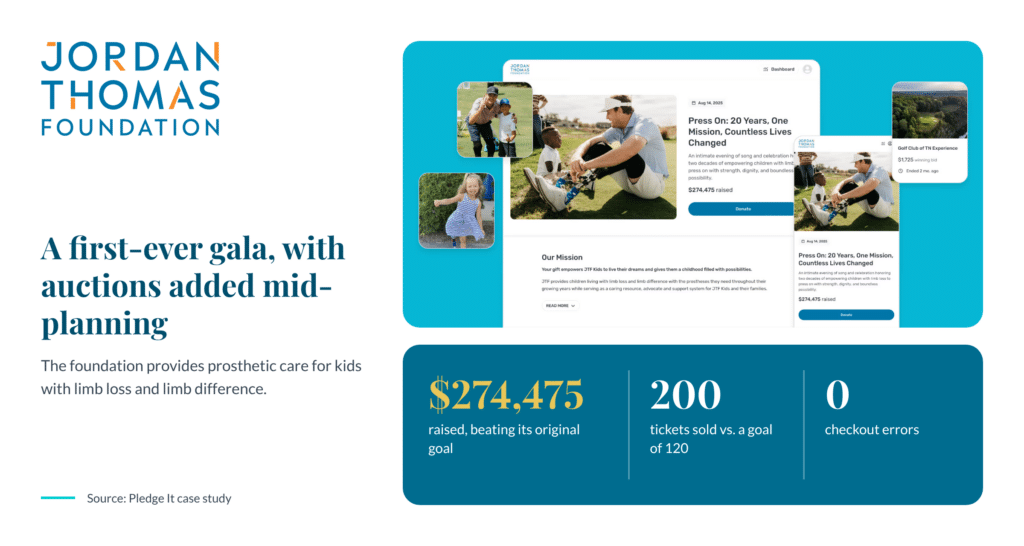
That’s how the Jordan Thomas Foundation wrapped its first gala. The team added auctions partway through planning, raised $274,475, finished above its original goal, and closed the night with zero checkout errors.
What Changes for Your Team
Mobile bidding also cuts the end-of-night work for your staff and volunteers. Nobody’s deciphering handwriting at closing or tallying sheets in a back room while guests wait to pick up their items.
Rather, you can watch the auction as it happens. Bid activity shows up by item and by bidder, so you can see which packages are heating up and which ones need a shout-out from the stage. If an item is drawing heavy interest near closing, you can extend the end time. Just send a quick message to bidders when you do, since changing the window won’t notify them on its own.
When the night wraps, you can download a winning bidders report along with a full record of who bid on what. It also tells you which items your supporters care about, so next year’s auction can lead with more of what works.
Making the Switch
Moving to mobile bidding for your nonprofit auction starts with picking a platform. We recommend looking for a few basics:
- Simple mobile registration that collects contact and payment info once
- Item pages with multiple photos, full descriptions, and categories
- Outbid alerts by text and email
- Automatic payment and receipts when bidding closes
- Reports that show who bid, who won, and what each item raised
On event night, you’ll need a TV or tablet for the live display and a plan for check-in. The Jordan Thomas Foundation set up four laptop stations and checked in 200 guests within an hour.
Then, before your next auction:
- Get guests registered early. Send the auction link in your pre-event emails and have volunteers help with sign-up at check-in. The fewer people registering mid-event, the more time they spend bidding.
- Put QR codes everywhere. On bid sheets, table cards, and the program.
- Give premium items real listings. Strong photos and real descriptions help guests picture themselves on that trip. Keep the list lean, too. A common rule of thumb is about one silent auction item for every seven guests.
- Hand your emcee the live display. Real-time numbers make for the best auction announcements.
Paper bid sheets ask guests to do the work. Mobile bidding lets them bid from their seat, pulls them back in when they’re outbid, and keeps more people competing for your top items. That’s how a $10,000 trip gets bid up toward its value instead of closing at less than half.
Looking for more auction tips? Watch the replay of Elevating Every Moment of the Auction Experience, where Siri Lippy of Auction Packages and I walk through each stage of an auction, from sourcing items to thanking winners. Then grab our Auction Readiness Checklist to plan your own.
Contributors

Dave Costlow
President, Pledge ItDave Costlow is President of Pledge It. Pledge It is a fundraising platform built to help nonprofits rally their communities, raise money, and reach their goals. From peer-to-peer campaigns and endurance events to galas and auctions, Pledge It gives organizations the tools to run any kind of fundraiser on one platform, backed by a customer success team invested in getting them there.